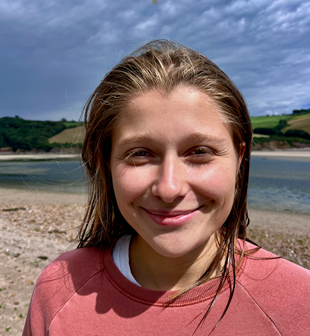
Yes, All FOUR of My PhD Supervisors Are Women
…So what?
Have we not passed the endless tyranny of the obvious? And yet, the shock factor of telling people doesn’t wear off. This underscores the disappointing stereotypes and perceptions we still hold about who makes it in STEM.
There are more men than women in science, and any conference photo is polluted with that reality. The representation that is sought is not even parity and it is only through incremental change that this will modernise. Casting a spotlight on teams such as my own, where all four supervisors are women, brings some much needed representation: girls who do STEM make it, and do it well.
I had no particular expectations about the gender balance of my supervisory team. What I did not anticipate, however, was how noteworthy others would find it. This highlights how much representation matters, not because women are absent from senior roles, but because people still find it remarkable. Science and engineering are spaces occupied by women, and there is most definitely space for more.
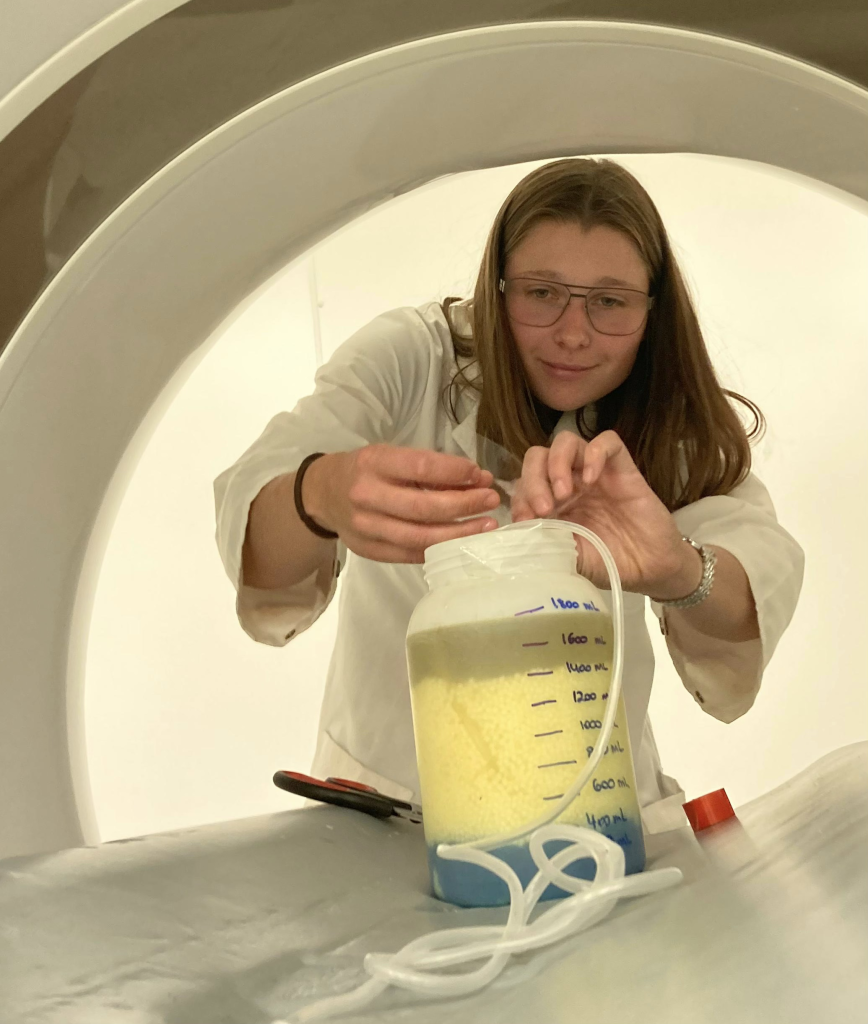
Read on to hear what some of the coolest women in science have to say about their work and the paths they took. Not only do their experiences shape the way I see myself in the field, their perspectives offer a clearer sense of what is possible for anyone thinking about jumping into the wonderful world of research…
Margaux Le Vaillant
What initially sparked your interest in your research field? What are you working on?
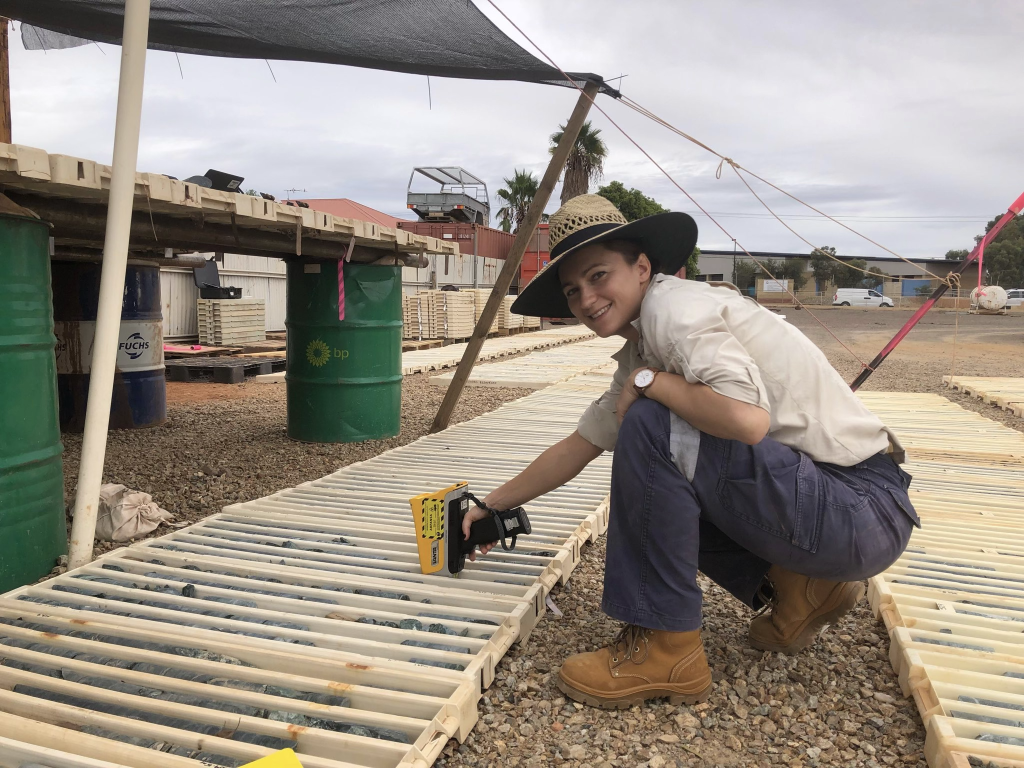
“I am a geologist, working in the field of mineral exploration, specialised in understanding how magmatic nickel-copper ores form. It’s hard to understand how I got here when you know that I grew up in an apartment in Paris… but high school friends will tell you that whenever rocks made their appearance in the science classroom, they’d get stuck at my table somehow… But the conscious decision to become a ‘rock doctor’, as my little cousin put it, came later when I decided I wanted to be outdoors and travel the world!”
What impact do you hope your research has on the world and your community?
“One of my main drives is to have fun and do cool science! And the work we are doing within this project playing around with fluids and plastic beads trying to recreate what happens in a magma chamber definitely ticks that box. But my second drive is to play my role in helping us achieve our goal of a more sustainable energy model, and to do that we are going to need to find a lot more nickel and copper. By understanding how these ore bodies form, we can then provide mineral exploration companies with the right tools to look for them!”
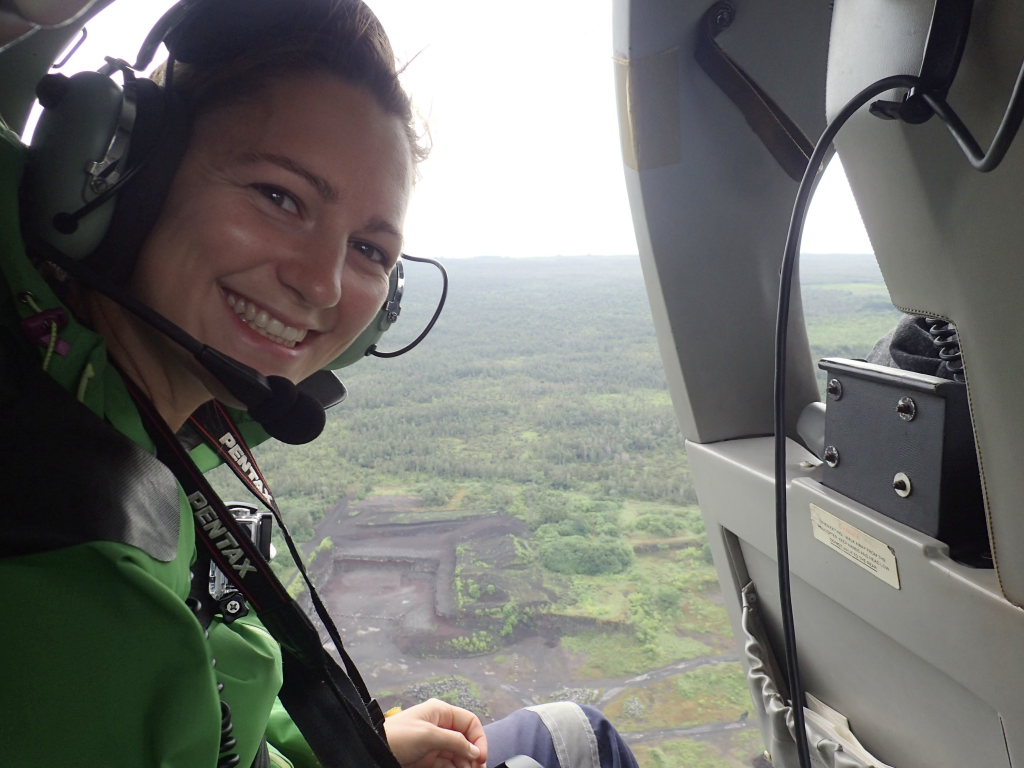
Lucie Domino
What do you find fascinating about your field?
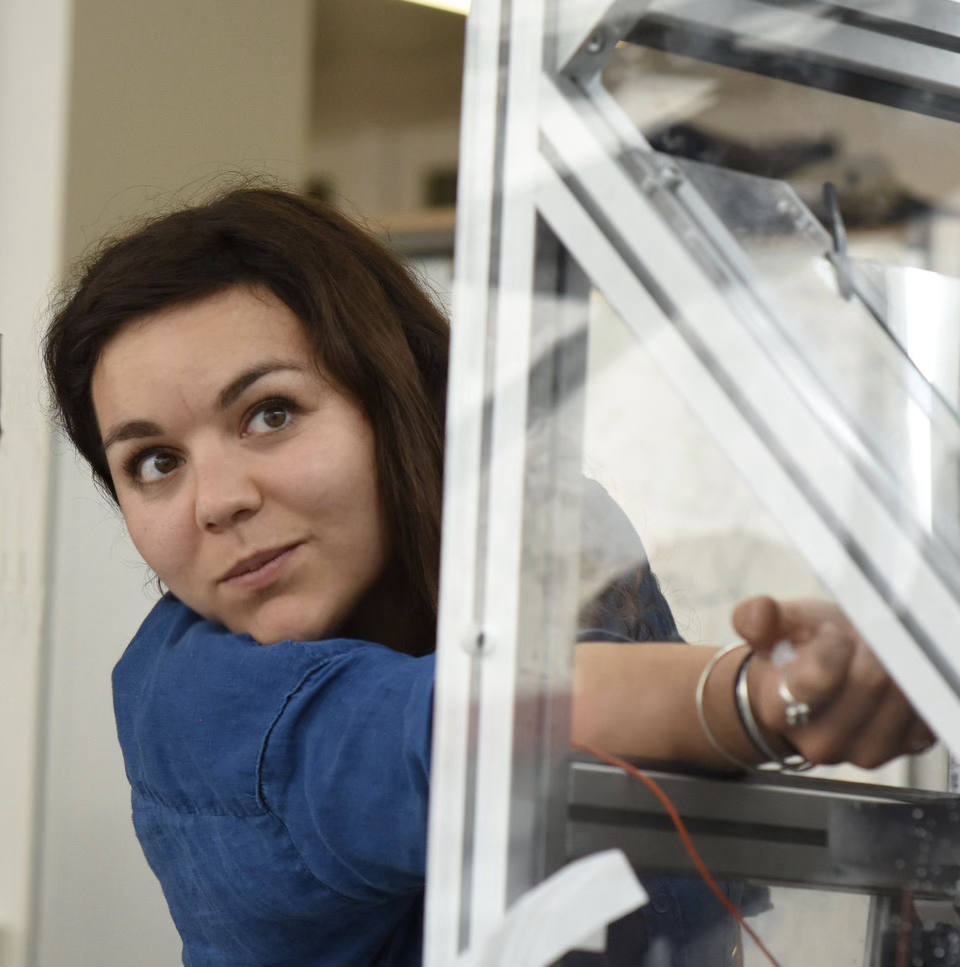
“My field of research is fluid mechanics, which I often like to describe as a form of ‘everyday physics’. I study things you can observe in your kitchen or in nature. I’ve always been very curious and asked a lot of questions to understand how things work and why they are the way they are. I love how seemingly simple observations can hide deep theoretical complexity and mathematical elegance.”
Any advice you would offer young researchers hoping to pursue STEM?
“Being a woman in STEM is still a major challenge, and I have encountered unsupportive colleagues and professors along the way. My advice to young researchers is to persevere and to surround themselves as much as possible with people who respect their ideas and value their voices. Working in a women-only team, as I do now, has been pure bliss.”
Anja Slim
What systems do you study?
“I’m a fluid dynamicist particularly interested in slow and sticky flows occurring in geological and industrial applications.”
What inspires you?
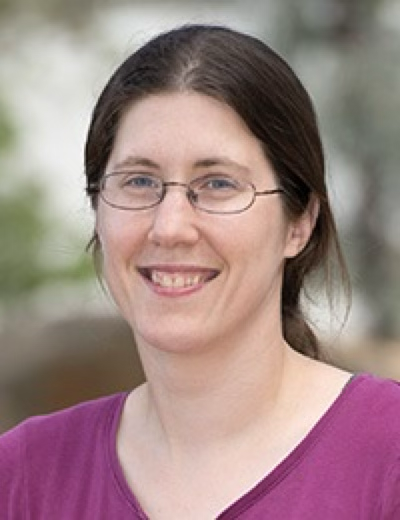
“I’m inspired by the wealth of problems that live at the crossroads of applied mathematics and the geosciences! I love how these questions can range from the surprising ways extremely dense sulphide melts find their way into mineable ore deposits, to very practical challenges like whether carbon capture and storage can genuinely help reduce carbon dioxide emissions. What motivates me most is digging into these complex systems using a combination of experiments and simulations, and then stripping the models back to their essentials where the deepest insights can often be gained.”
Pascale Aussillous
What drew you to your work?
“I have always appreciated the rational and reassuring side of the scientific approach, where knowledge can be built within clear boundaries. After general studies in physics and chemistry, I turned to the world of experimental fluid mechanics, where one can truly observe the phenomena being studied! I enjoy the challenge of understanding complex systems using only the most essential ingredients, combining hands-on laboratory experiments with theoretical analysis. For example, in this project we try to mimic a magma chamber in a one-litre bottle using plastic beads and a viscous fluid!”
What impact do you hope to make on the community of young scientists?
“I had the opportunity to be guided throughout my career by several outstanding researchers, both men and women, who were passionate about sharing their knowledge. I hope to follow their example and continue passing on what I’ve learned.”
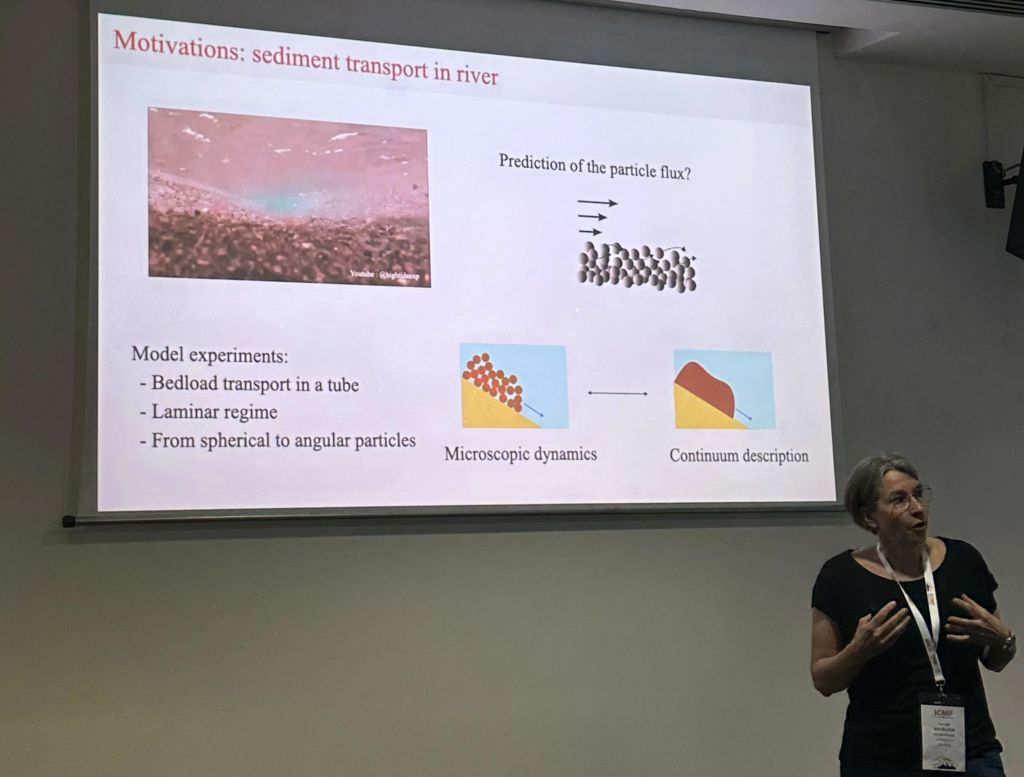
This is what scientists look like. None of these women are here to ‘defy the odds’ or prove they can do science. They are here because they are excellent at what they do. Representation matters not as a headline, but as a quiet normalisation.
Happy International Day of Women and Girls in Science.
Learn more about my research here.