My first year of the PhD as an AI-assisted condition monitoring researcher
I have just finished my first year of PhD life in the wonderful AUFRANDE project, and I would be very happy to share some of my nice experiences in this blog.
Research Topic
My research focuses on condition monitoring, a technology that aims to assess the health of engineering systems while they are operating. In practice, this means using data collected from sensors to detect early signs of degradation or abnormal behaviour before any failures occur.
Condition monitoring is widely used in many real-world applications, such as wind turbines, airplanes, helicopters and other complex industrial systems. These systems rarely operate under fixed conditions: their loads, speeds, environments and usage patterns can change continuously and sometimes unpredictably. As a result, the data they generate can vary significantly over time.
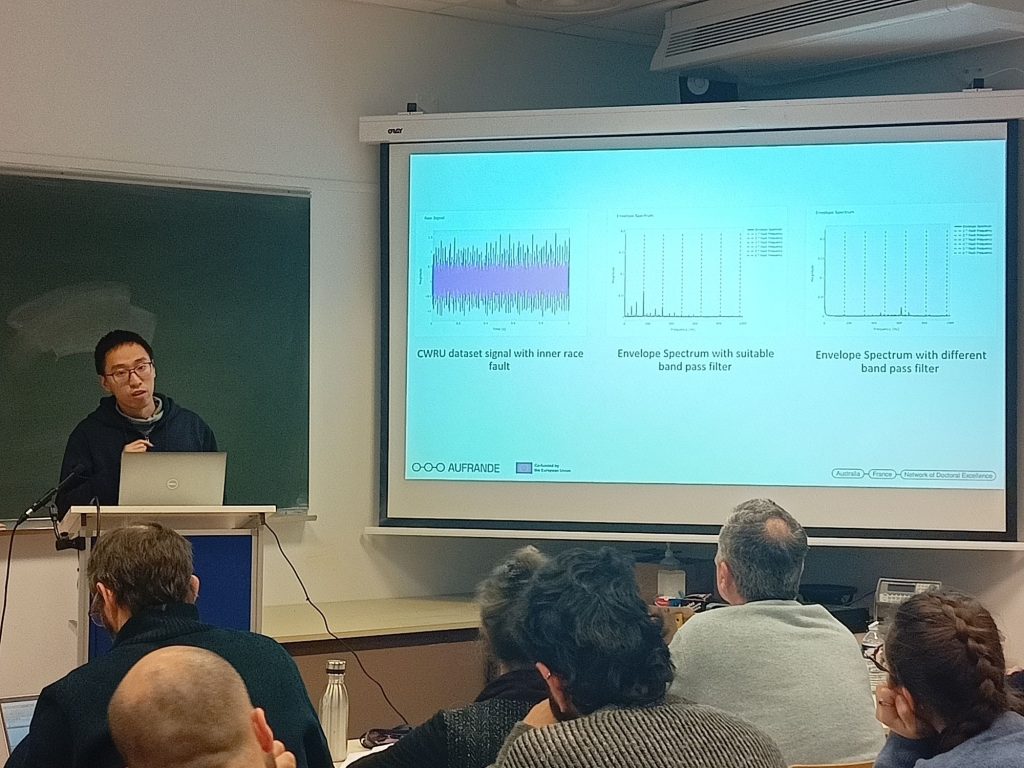
One of the key challenges in my research is therefore understanding how to apply condition monitoring reliably when working conditions are constantly changing. Models that perform well under one operating condition may fail under another, making robustness and adaptability essential.
During my first year of the PhD, my main goal was to build a solid foundation for this research. This involved reading and understanding existing scientific literature, learning the methodologies commonly used in condition monitoring and, most importantly, gaining hands-on experience with real monitoring data, which is often noisy, complex and imperfect.
HUM 2025 Data Challenge
In March 2025, I had my first opportunity to apply my condition monitoring research in a data challenge competition. This challenge was an important part of the 14th Defence Science and Technology Group (DSTG) International Conference on Health and Usage Monitoring. The task was to detect and track a rare but critical failure mode: a fatigue crack propagating within a gearbox casing.
What made the problem particularly challenging was the application context—the gearbox was used in a helicopter. Helicopters operate under highly complex and variable working conditions, which can strongly affect sensor signals and make reliable condition monitoring much harder. At the same time, it is also a deeply meaningful task: if unexpected faults can be detected early in real operations, serious accidents may be prevented and lives can be saved.
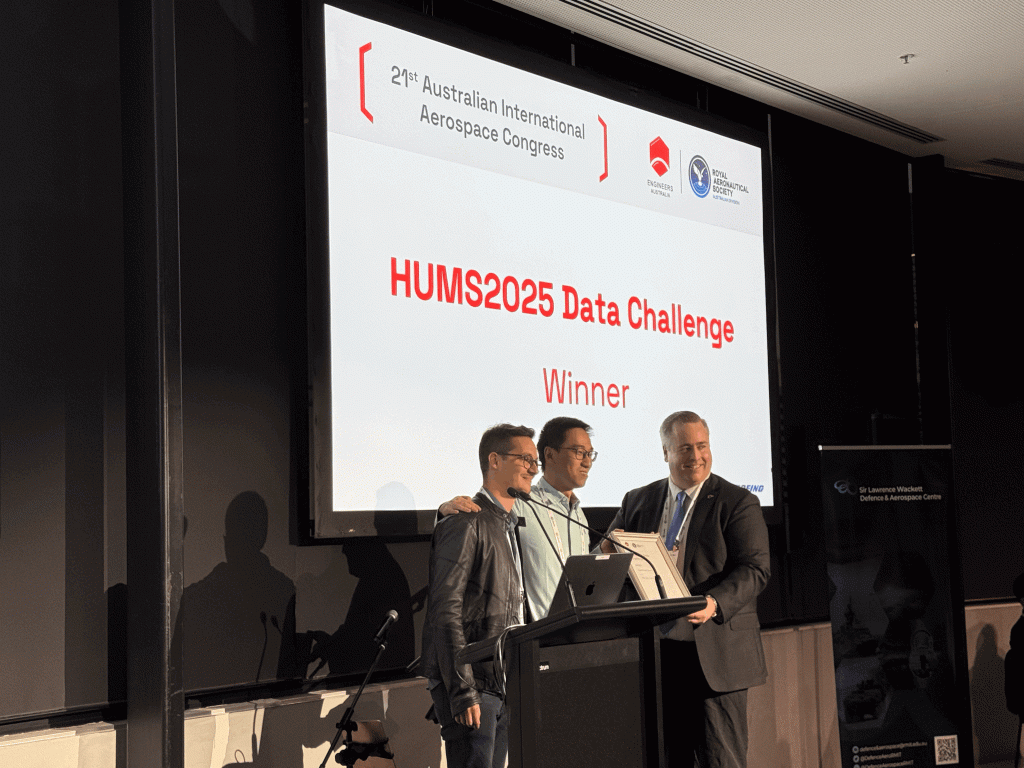
Luckily, my team—“Team Crack Detective”—won the data challenge! Beyond the result, this experience was a major milestone in my first year of the PhD. It showed me what it feels like to take research ideas out of papers and apply them to a realistic monitoring problem and it gave me strong motivation to keep developing robust methods that work under challenging, changing conditions.
Future PhD
Looking back on my first year, the HUM 2025 data challenge was a real turning point. It showed me how my research can move from ideas on paper to solutions tested on real data, and it gave me confidence to keep pushing on the key challenge I care about: making condition monitoring reliable under changing working conditions.
Now, the next step is less about competitions and more about careful work: digging deeper into the data, improving robustness and interpretability and turning what I’ve learned into solid research outcomes.
Categories
Latest posts

A PhD journey is not just about a certificate

Why I want to be a scientist (and why I chase light for a living)
From plants to antimicrobial materials: when nature gives you a starting point