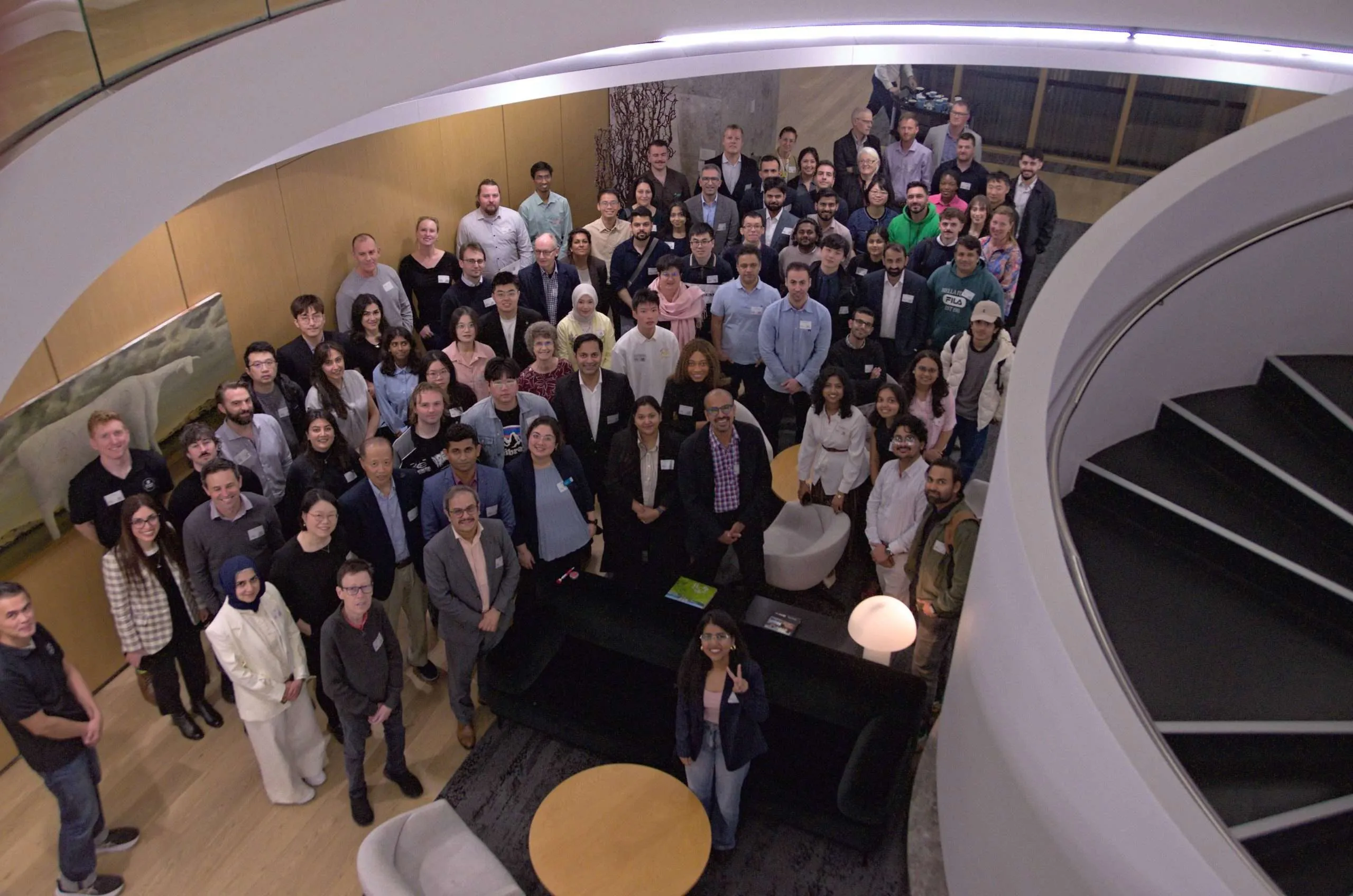
A milestone in my PhD journey: my first Australian battery conference
Attending the first Annual Meeting of the Australian Battery Society in Melbourne was a memorable milestone in my PhD journey. I am jointly supervised by Dr Cyril Aymonier and Dr Laurence Croguennec from ICMCB, CNRS, France and Dr Richard Tilley and Dr Neeraj Sharma from UNSW Sydney, Australia. I feel incredibly fortunate to work under the supervision of leading researchers. Their expertise and guidance continue to inspire and support my development to become an independent researcher. Dr Croguennec and Dr Sharma are two of the top leading battery scientists in the world.
I was excited to meet researchers working in the same field, learn about the latest developments in battery technology and share my research with the wider scientific community. Although I had attended academic events before, this conference felt particularly meaningful. It gave me the opportunity to step outside the laboratory and see how my research connects with the broader goals of the battery industry and the global transition towards cleaner energy.
From the laboratory to showcasing my research in Melbourne
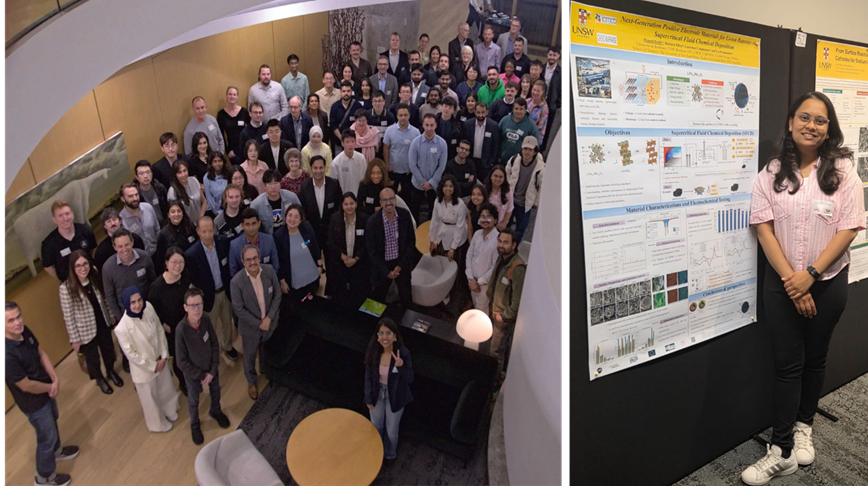
My research focuses on improving the performance and long-term stability of Li-ion batteries through the surface modification of cathode materials. At the conference, I presented my work through a poster on developing a protective iron phosphate (FePO4) coating on lithium nickel manganese oxide (LiNi0.5Mn1.5O4), commonly known as LNMO, via the supercritical fluid chemical deposition method.
Presenting my research in front of battery scientists, academics and industry professionals was both exciting and challenging. Preparing for the conference encouraged me to think carefully about how to explain my work clearly and effectively. In the laboratory, I usually focus on experimental procedures, characterisation results and scientific discussions. However, presenting at a conference requires a different approach. I needed to explain not only what I was doing, but also why the research is important and how it could contribute to the future of energy storage.
Explaining a complex research project in a short presentation encouraged me to look at my work from a broader perspective. I had to decide which information was most important and how to communicate technical concepts in a way that could be understood by people from different backgrounds. This experience taught me that scientific communication is not only about using technical terminology. It is about telling the story of the research, identifying a problem, explaining the proposed solution and showing why the work matters.
The questions and discussions after my presentation were particularly valuable and encouraged me to think more deeply about my research and consider new ideas for my future experiments. The feedback I received also reminded me that presenting research is not simply about sharing completed results. It is an opportunity to learn, reflect and improve. Every question can help reveal a new perspective or identify an area that deserves further investigation.
Learning from the battery research community
One of the most rewarding aspects of the conference was learning about the latest developments in battery research. The presentations covered a wide range of topics, including advanced battery materials, cell design, battery safety, recycling, manufacturing and large-scale ongoing research. It was inspiring to see how researchers from different disciplines are working to address the growing demand for safer, more reliable and more sustainable energy technologies. The conference made it clear that the development of better batteries requires collaboration between chemistry, materials science, engineering, manufacturing and environmental research. Listening to researchers from different areas helped me understand the importance of considering the entire battery system rather than focusing only on one material or one property.
Building connections and confidence
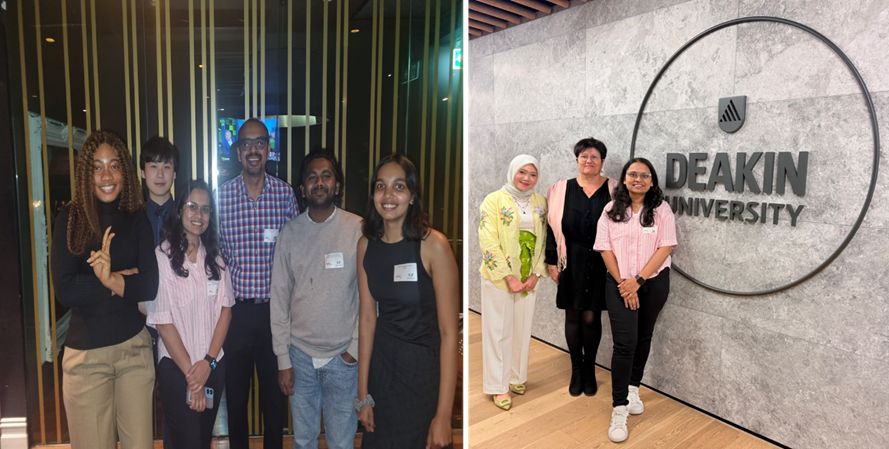
The conference also gave me the opportunity to connect with international researchers from different universities, research institutions and industry organisations. These conversations were an important part of the experience. Meeting people who share similar research interests created a sense of connection within the wider battery community and these interactions were especially meaningful. Being a cotutelle student, starting a PhD in a new country can sometimes feel challenging, particularly when adapting to a different academic environment and building a professional network. This conference gave me the confidence to introduce my work, speak with other researchers and participate in scientific discussions. I realised that scientific progress is built not only through experiments and publications, but also through communication, collaboration and the exchange of ideas.
A meaningful step in my PhD journey
For me, this conference was about more than presenting a poster. This conference was not only a presentation experience, it was a reminder that every researcher begins with curiosity, grows through challenges and moves forward through collaborations. This conference motivated me to continue working towards the development of better energy storage technologies. Although improving a battery may begin with a small change at the surface of a material, its impact can contribute to a much larger goal, creating safer, more durable and more sustainable energy systems for the future.
Find out more about my research project here.