A PhD journey is not just about a certificate
When people hear the word “PhD”, they probably imagine a thesis, research papers, conferences and finally a certificate with “Doctor” written somewhere on it.
I used to think about it in almost the same way.
Do the research. Publish the papers. Finish the thesis. Get the degree. Mission accomplished.
But after spending a few years doing a PhD, I have realised that the certificate is only a small part of the story.
The real journey happens between experiments that fail, rejected papers, deadlines, moving countries, apartment hunting, residence permits, language barriers and those rare moments when something finally works as expected.
Some of these lessons happen inside the laboratory. Many others happen outside it.
Three things I have learned so far:
- Getting comfortable with “I don’t know”.
- Accepting that failure is part of the process.
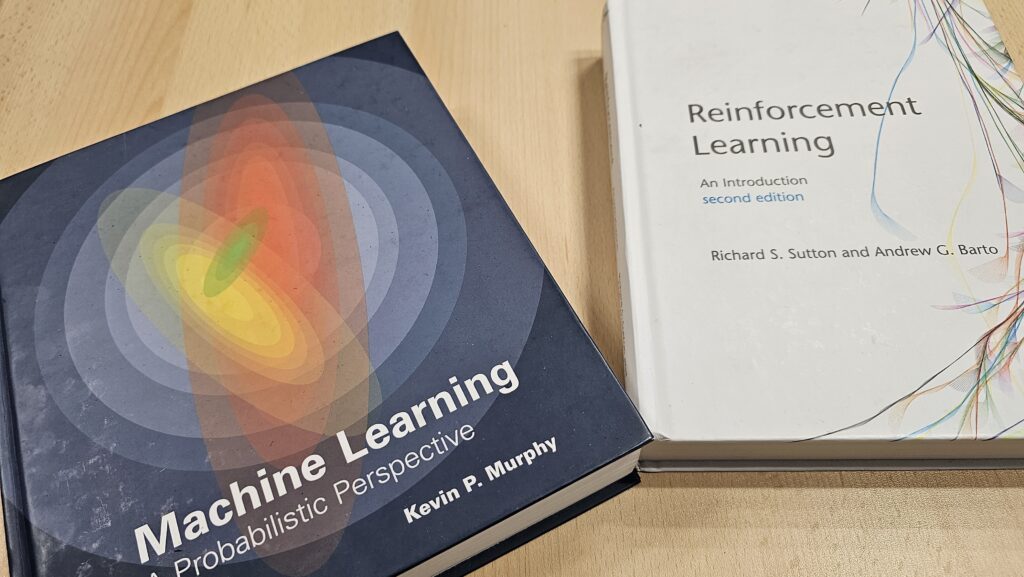
- Realising that my reinforcement learning training also happens in daily life, where I sometimes feel like the agent learning to adapt to a new environment.
Getting comfortable with “I don’t know”
Before starting my PhD, I was already a lecturer at a polytechnic in Indonesia, my home country. So research itself was not something completely new to me. I had been involved in research and publications before, although most of my work was more applied and implementation-oriented, with publications mainly at the national level.
Then I started my PhD and entered a rather different world.
My current research focuses on Multi-Agent Reinforcement Learning, or MARL. The problem was that MARL was relatively new territory for me. My original background was closer to data engineering. I had worked with some parts of reinforcement learning before, but again, mostly from an applied perspective.
So, during the early phase of my PhD, there was one sentence that appeared very often in my regular meetings with my supervisors:
“I don’t know.”
Sometimes they asked about a theoretical concept.
“I don’t know.”
Sometimes they asked why an algorithm behaved in a particular way.
“I don’t know.”
Sometimes one answer produced another question, and my answer was, once again:
“I don’t know.”
I have probably said those three words more times during my PhD than during the rest of my academic career combined.
At first, it was uncomfortable.
I had already been a lecturer. I had taught students, conducted research and worked on technical projects. Naturally, there was a part of me that felt I should know the answer.
But those meetings pushed me to go deeper.
I started reading more, questioning things that I previously accepted at the implementation level and trying to understand why things actually worked. Every answer led to another paper, another concept and usually, another question.
And then something slightly terrifying happened.
The more I learned about MARL, the more I realised how much I did not know.
Sometimes I joke that perhaps I now understand five percent of the whole field. The remaining 95 percent is still somewhere inside the enormous territory called “I don’t know”.
Strangely, I find that exciting.
Instead of making me want to surrender, it makes me want to explore MARL more. There is always another idea to understand and another problem waiting behind the previous one.
And eventually I realised: this is exactly why I am doing a PhD.
If I already knew everything about my research topic, if I were already an expert with all the answers, then there would not be much reason to spend several years doing a PhD in the first place.
Apparently, becoming comfortable with “I don’t know” is part of becoming a researcher.
Unfortunately, “I don’t know” followed me outside the laboratory too
The funny thing is that my relationship with “I don’t know” did not stop when I closed my laptop.
Moving to France gave those words a completely different meaning.
When I first arrived, French was almost completely new to me. I knew words such as bonjour and merci, which, as I quickly discovered, are not quite enough to manage an entire life in France.
There have been countless occasions when someone started speaking to me in French at a market, coffee shop, office or on the phone.
They said something.
I looked at them.
They said something again, probably more slowly.
I still looked at them.
And eventually, somehow, the conversation arrived at the international language of confusion:
“I don’t know.”
Many everyday interactions in France naturally happen in French and not everyone is comfortable switching to English. So, things that would normally be very simple suddenly became small challenges.
But just like my research, everyday life slowly became easier.
I learned a little more French. I understood a little more about how things worked. Situations that once felt completely unfamiliar gradually became normal.
So during my PhD, “I don’t know” has followed me almost everywhere: from discussions about Reinforcement Learning with my supervisors to conversations at a French market.
And perhaps that is one of the unexpected lessons of this journey.
Saying “I don’t know” does not have to be the end of a conversation.
Sometimes, it is simply where learning begins.
Failure becomes surprisingly normal
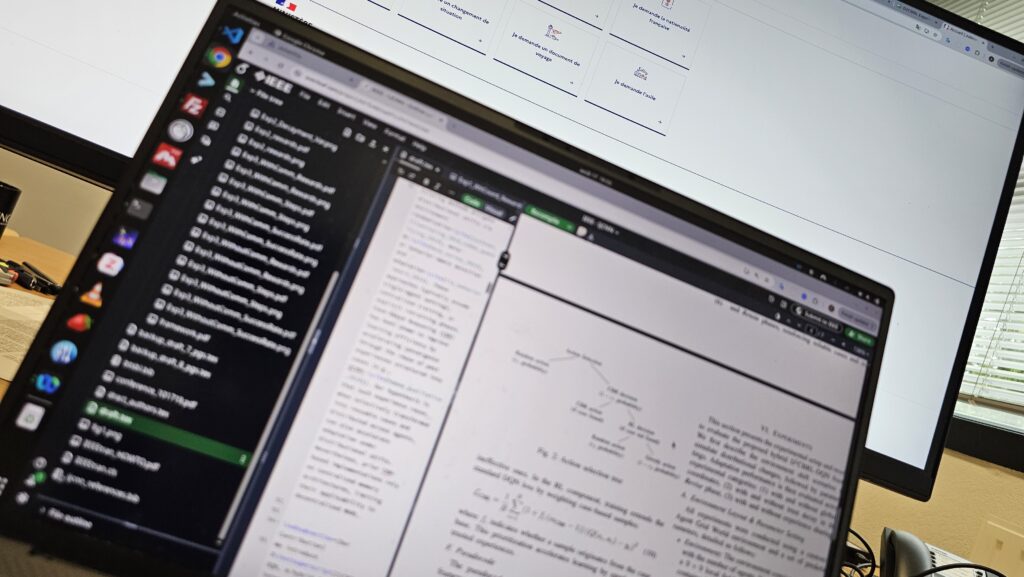
If “I don’t know” became familiar during my PhD, another word also started appearing quite often:
Failed.
Failed experiment. Rejected paper. Failed apartment application. Failed administrative process.
Apparently, failure is also part of the PhD package.
In research, failure is normal
Research rarely works exactly as I expect.
Sometimes I spend days implementing an idea, only to discover that the result is worse than the baseline. Sometimes changing one parameter improves one result but makes another one worse.
And sometimes, after waiting a whole week for an experiment to reach 90 percent, the server suddenly crashes and everything stops.
At that moment, it definitely feels like wasted time. I even start wondering whether there is a publication venue that would accept a collection of all my failed results instead of only the final successful one. 😄
But later, I usually realise that a failed experiment still gives me information. Maybe my assumption was wrong. Maybe the method needs improvement. Maybe there is simply a bug hiding somewhere in the code.
So, I modify it, run it again and wait.
Sometimes it fails again.
Finally, it works!
And then there is paper rejection
Publishing research brings another type of failure.
I spend months doing the research, preparing experiments, writing the paper and discussing every detail with my supervisors.
Then I submit it and wait.
Finally, the decision arrives.
Sometimes it says accepted.
Sometimes it says rejected.
Of course, receiving a rejection after months of work is disappointing. My first reaction is usually something like, “Don’t the reviewers know that I barely slept for several days finishing this paper? 😄”, rather than, “Wonderful, more comments to improve my paper!”
But after some time, I usually start seeing the reviews differently. Some comments point out weaknesses that I did not notice before.
Then I start again: revise, improve and submit again.
I have learned that rejection does not always mean the research is bad.
Sometimes it simply means:
Not this version. Not yet.
Failure also happens outside research
The same thing happens in daily life abroad.
I have failed to get apartments I wanted, struggled with administrative procedures and sometimes prepared documents only to discover that something was still missing.
So I try again.
Find another apartment. Prepare another document. Contact another office.
Strangely, it feels similar to research.
Something does not work, I learn what went wrong and I try a different way.
I still do not enjoy failure. That would be asking a little too much.
But I am definitely less afraid of it.
Reinforcement Learning outside the lab: this time, I am the agent
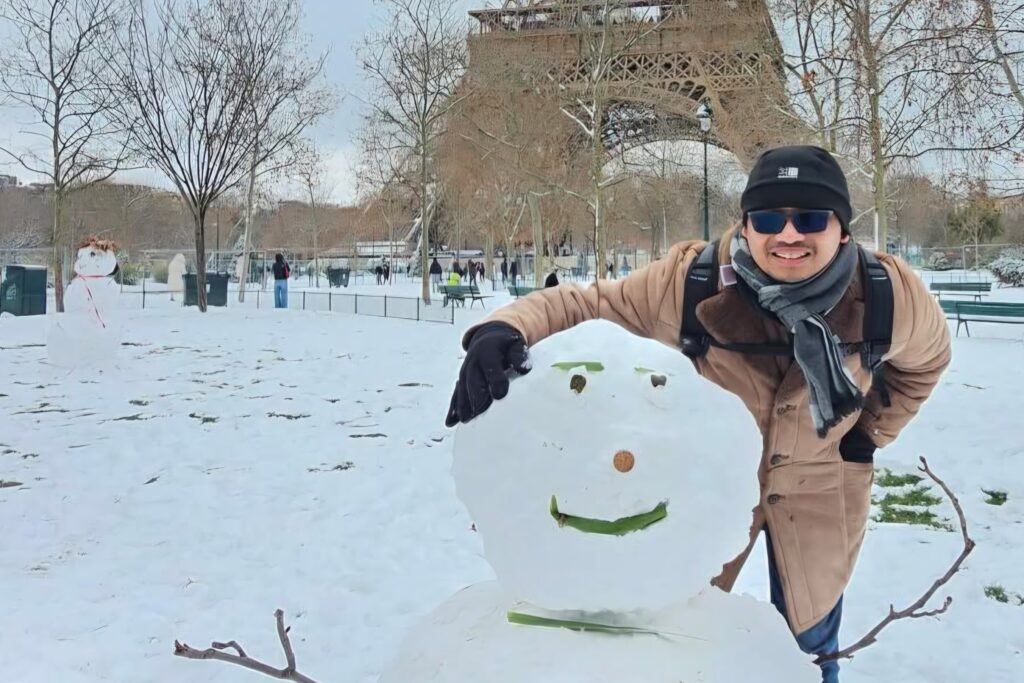
Moving between countries during my PhD also made me realise what Reinforcement Learning actually looks like in real life.
How to adapt.
When I arrived in France in November 2023, even the weather gave me my first lesson.
Coming from Indonesia, I did not really understand what five degrees Celsius meant in practice. So there I was, walking outside in a relatively thin jacket and quickly discovering that European autumn was not particularly interested in my tropical confidence.
Lesson learned.
Buy a proper jacket.
But adapting was not only about the temperature.
Even the way we work is different
One thing I really appreciate in France is the relationship between PhD students and supervisors.
I came from a more hierarchical academic culture, so at first I was surprised by how much the relationship here felt like a partnership. I could disagree, discuss an idea openly or challenge a suggestion without feeling that I was crossing some invisible line.
That took some adjustment, but I really like it.
I also discovered a very different attitude towards work-life balance.
At one point, one of my friends was actually contacted by HR because he had not taken enough holiday.
For someone coming from a culture where working constantly can sometimes be treated almost like an achievement, this was quite a surprise.
Apparently, taking a break is also part of doing your job properly.
I am still learning that one.
Then there are the cultural surprises
Some lessons were considerably more entertaining.
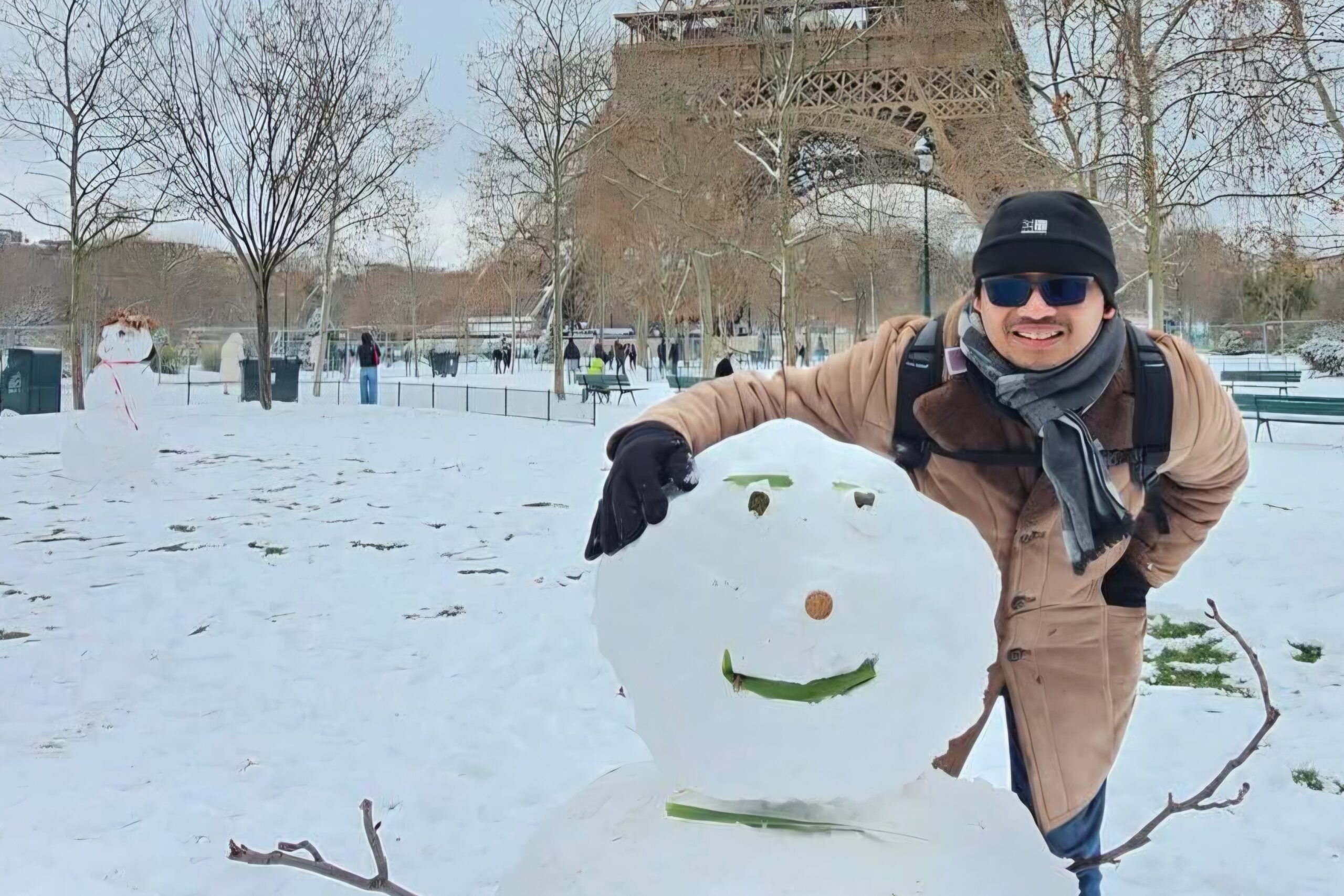
During a winter holiday, I visited a small non-touristic village in Belgium to see one of the famous battlefields featured in the series Band of Brothers. It was also one of the first times in my life that I had seen proper snow, so naturally I was excited and started taking photos.
Including photos of some houses.
Apparently, this was not universally interpreted as innocent tropical enthusiasm about snow.
Someone called the police, probably just to tease me with, “You’re from the tropics, aren’t you? You came here looking for snow, didn’t you?” 😄
For a moment, I genuinely thought my holiday might become much more memorable than planned.
Coming from Indonesia, the situation felt particularly strange to me. In many villages back home, if a stranger stopped near someone’s house, there was at least a reasonable chance that the person would come outside, ask where I was from and perhaps invite me to sit down for tea.
Here, I discovered another possible outcome: Police.
And then there is food
This may sound trivial until I am hungry.
In Indonesia, the solution is simple.
Go outside.
Somewhere nearby there will probably be bakso, mie ayam, fried rice or another place selling a proper meal with rice.
Here, especially at certain times of the day, the answer can be:
Well… good luck.
I quickly learned that moving abroad also means changing small habits that I had never considered “habits” before.
How I eat. How I greet people. How I communicate with supervisors. How I organise my holidays. How I dress for the weather. Even how freely I point my camera at a beautiful snowy village.
None of these things appear in my PhD research proposal.
But adapting to them has become part of my PhD journey.
And perhaps this is another reason why doing a PhD abroad is more than completing research.
So, in the end, my PhD is teaching me much more than how to finish a thesis. I am learning to say “I don’t know”, to survive failure and apparently to behave like a Reinforcement Learning agent in real life: observe, make a mistake, get a negative reward, update the policy and try again. Hopefully, by the time I receive the certificate, both my research model and my own life policy will have converged.
Thanks to AUFRANDE for choosing me to be part of the DC family on this great journey. And yeah, maybe the certificate itself is just a bonus. 😄
Find out more about my research project here.